fig. p-06 · product after an acqui-hire
the problem
Slick wanted to be the Gen Z social network of the country, and I arrived attached to an acqui-hire: the company bought Circles, the platform I had built in college, and me along with it.
An early social network is an empty room, and people do not stay in empty rooms.
what I did
I came in as an intern and, because I had context from both sides of the deal, ended up as the one person on product full time; the product lead title caught up about six months in. Every notification, every line of in-app copy, every message we sent a user went through me, with a team of interns to coordinate, and I worked on strategy with the founder, whose call it stayed. In that window the network grew from zero to 2.5 million users, the figure the company announced. I owned the product surface during that growth. The growth itself belonged to the whole company.
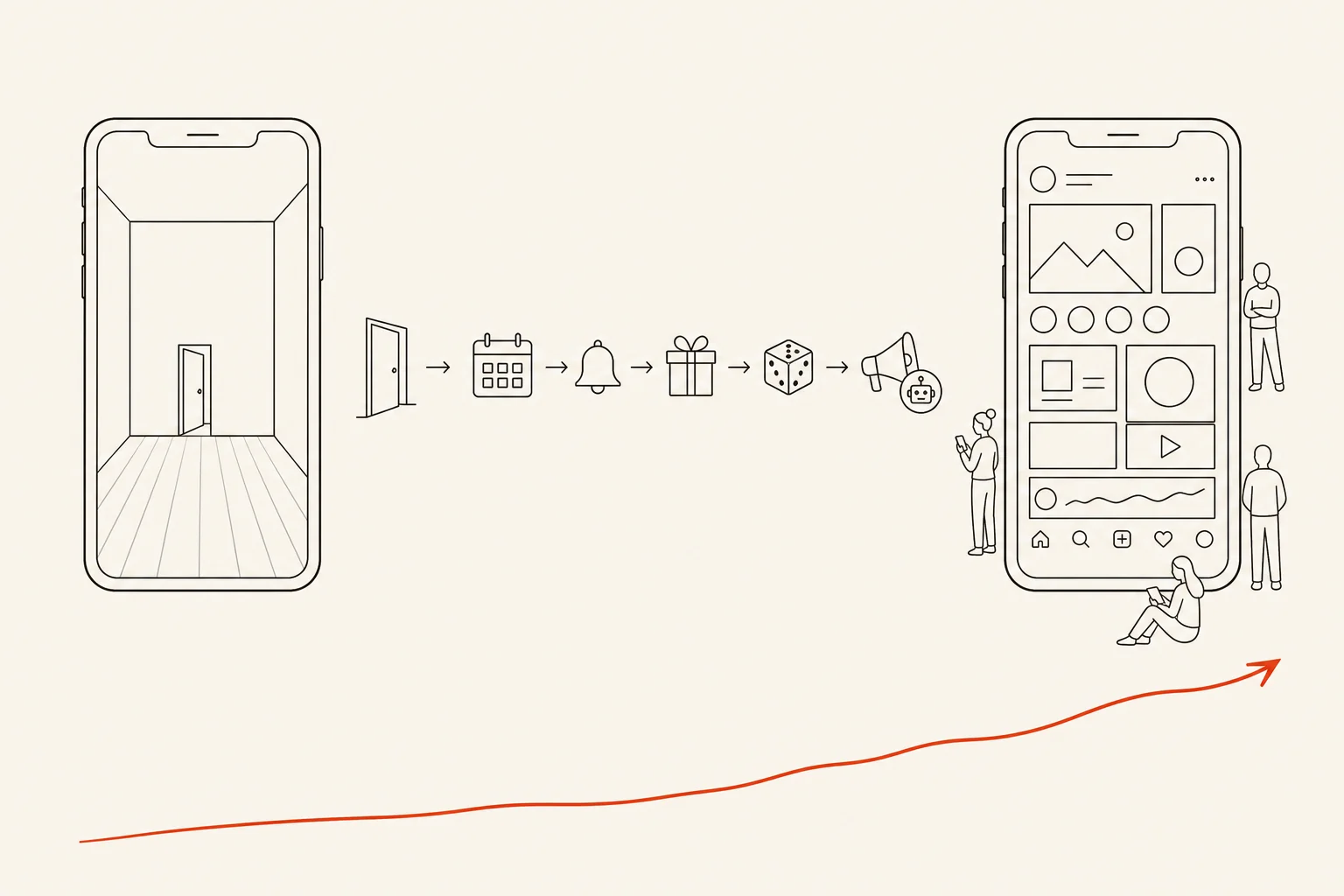
The harder problem was the cold start, and the answer I built was a set of AI-driven presences inside the app: in-app events, nudges and notifications, rewards, small games, and a handful of clearly automated accounts posting updates and summaries the way update bots do on Twitter. Together they made an early feed feel like a place where something was happening, and weekly actives multiplied several times over while the real network filled in.
I also led Slick's social media team as its creative lead, with camera people and editors reporting to me. The format that worked was vox pop, street interviews cut for Instagram, and the best reels passed a million impressions each.
method
The experiment was not a dashboard. It was a feed that had to feel occupied on a Tuesday night in a city that had not signed up yet. Events, nudges, rewards, and the automated update accounts carried the room until people did. The measure was weekly actives, watched week over week, against the empty-room baseline. Copy and notification text were the other instrument: if a line did not earn a return visit, it got rewritten.
What I could not keep is the original chart. Fig. p-06.1 is redrawn from that trajectory, not exported from the analytics tool.
what I found
Retention depended on writing as much as on features; the copy is the product surface a user actually reads.
A feed that is partly system-generated works best when people can tell which part is which. The update accounts were the easy case, because their job was obvious from the first post. The lesson I took from the rest of the toolkit is that synthetic presence should be framed as such inside the product, not on a policy page. That is where the legibility thread on this site started. I did not have the language for it in 2023.
open
How much liveliness a product can manufacture before it should hand the room over to its people. The company later found its next chapter in quick commerce, and I found mine closer to home.